Man, kick that habbit
Habbit, kick that man
Kick that man habbit
That kick habbit man
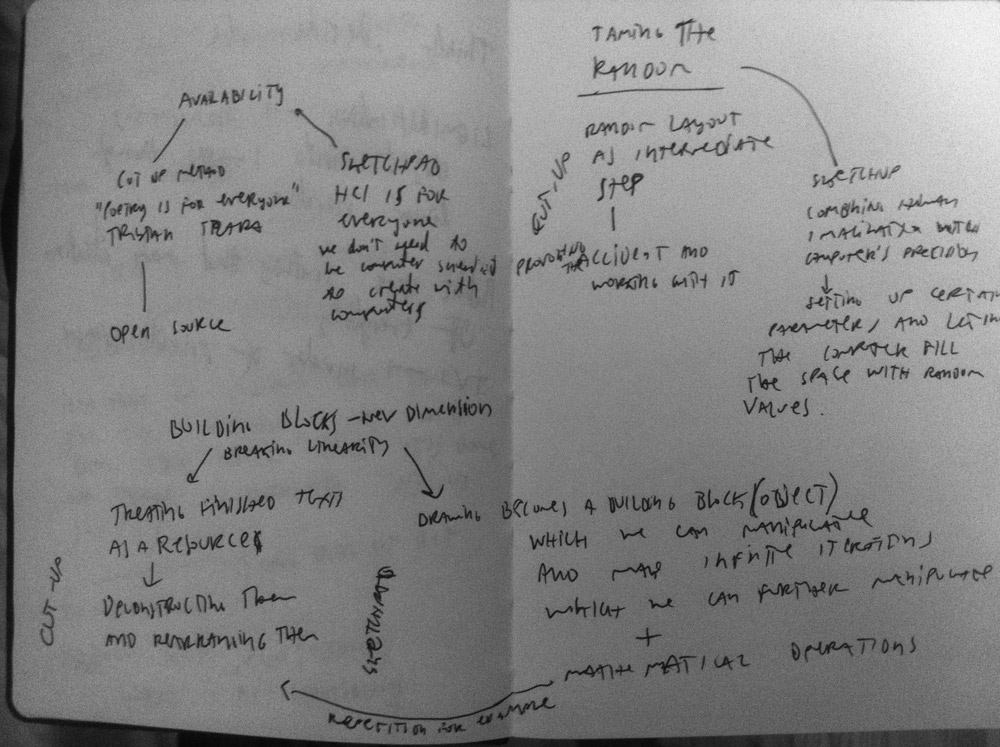
This post will try to establish connections between two texts - Cut-up method of Brion Gyson written by William S. Burroughs and Sketchpad written by Ivan Sutherland. Burroughs and Sutherland, beat generation writer and MIT computer scientist, didn't seem to have much in common. Except kind of similar physical appearance (see the photos under the text) and a fact that they were both influential and innovative. Nevertheless the two texts have many similarities and contain some common ideas. Both of the texts were written in the United States in the beginning of sixties. Both texts could serve as an instruction manual for production by innovative methods. In both texts we can see some examples of possibilities which this new techniques introduce. About the ideas, I found 3 main concepts that are common:
1. Availability
2. Breaking the linearity
3. Random / Constraints
1. Availability
Cut-up method was inspired by ideas of Tristan Tzara, one of the founders of Dadaist movement who made a song by taking random words out of a hat and said Poetry is for everybody idea that was so radical that got him kicked out from the movement. Burroughs also believed in that, by cutting up existing poems and creating new ones, everybody can be a poet.
Sketchpad, by introducing the first graphical user interface enabled anyone (who had the access to the system, of course there weren't many people with the access to MIT's Lincoln Labs where the computer was) to communicate with the computer. Invention of GUI meant that you don't have to know programming language in order to create with the computer. So in a way Sketchpad tells us: Human-computer interaction is for everybody.
2. Breaking the linearity
Cut-up method is treating finished text as a raw resource, to be deconstructed and used as building blocks from which we can create anything. We can construct, deconstruct and reconstruct.
With sketchpad drawing is becoming a building block (object) which we can manipulate and make infinite iterations which we can further manipulate all at once(class).
3. Random / Constraints
With combination of random and constraints we are opening new possibilities. Burroughs believed that random doesn't have to be the final, but intermediate step in production. We can provoke the accident and than work with the material that the accident produced. The same happens when we give some constraints to the computer software and leave some space for the random values.
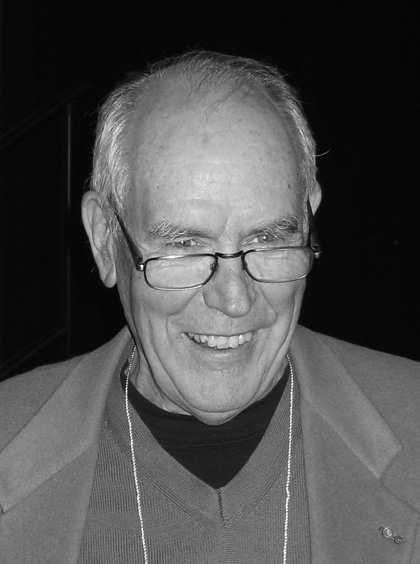
Ivan Sutherland
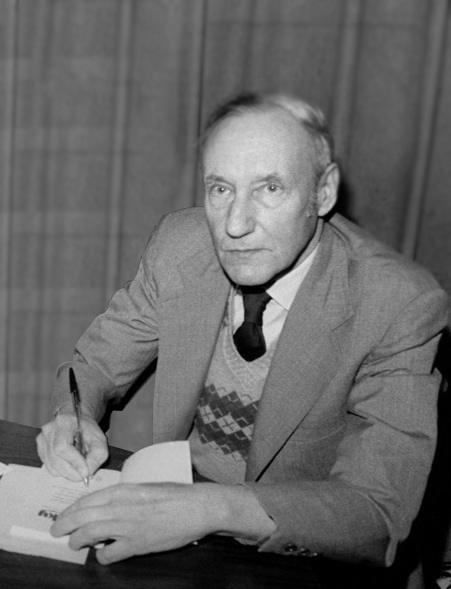
William S. Burroughs